

How do you get in?
It's really interesting how different swimmers get in the same body of water. And there can be something intuitively ritualistic about it as habits are formed.......

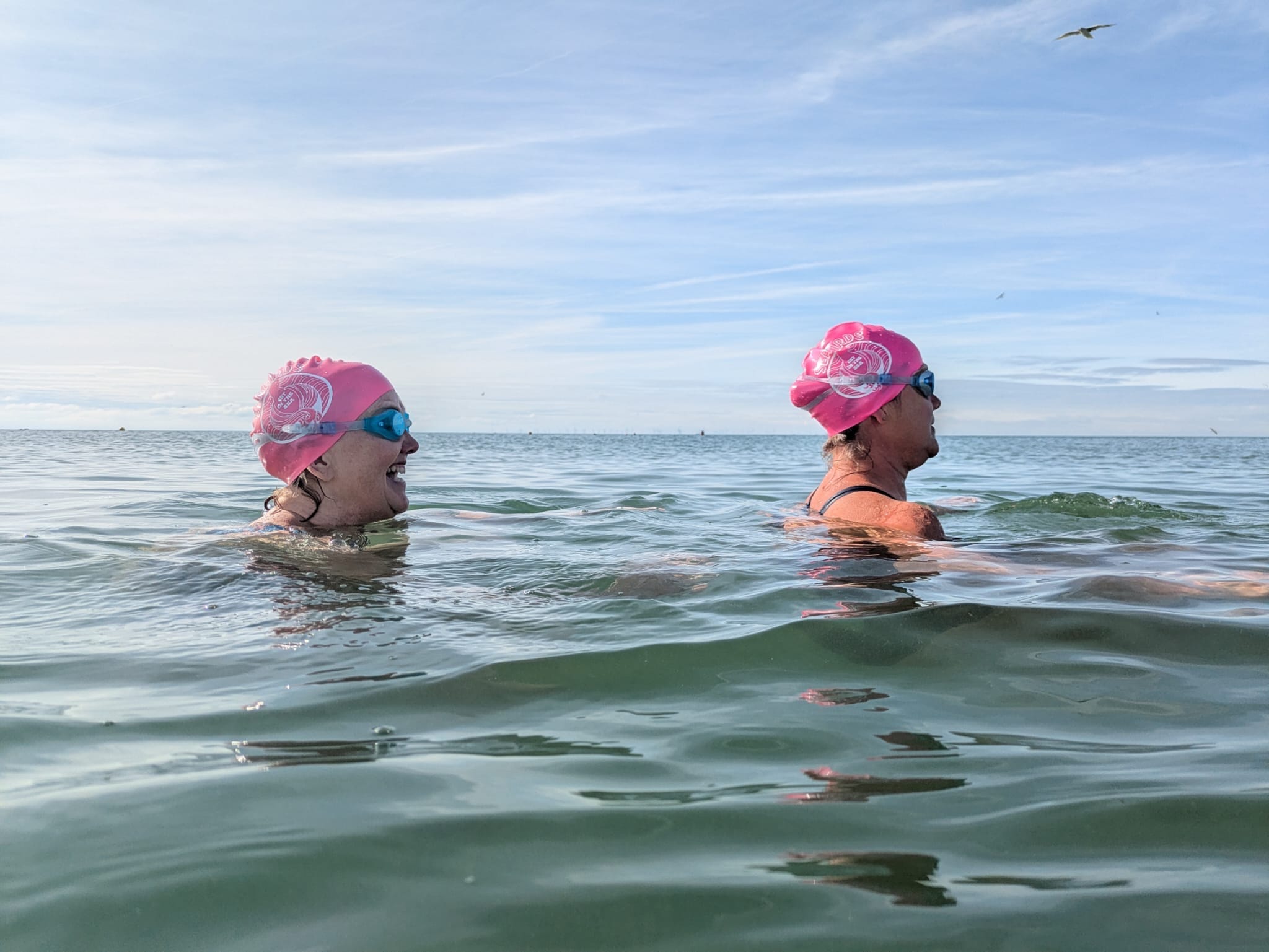
Photo credit: Julia Claxton
The sea is a force amongst my swimming community that brings us together. We share a love of cold water swimming and as such our shared experiences of joy, respite and faffing is what notably makes us the same. But we all get in the sea differently.
It's really interesting how different swimmers get in the same body of water. And there can be something intuitively ritualistic about it as habits are formed....... You can recognise other swimmers by how they get into the water. I didn’t realise that I shake my arms which is actually a form of stimming, until others captured images of me doing it. It was involuntary, a way of calming myself that I was completely unaware of but is a huge part of my ritual as I enter the water.
Patrick McLennan, is the the co-director of a documentary called The Ponds, about Hampstead Heath Ponds. In an article written for the Guardian by Tim Lewis McLennan explains "Outdoor swimmers tend to divide into “divers” and “creepers”, with the latter group easing themselves into the water more gradually. There are also “tea-baggers”: people who jump in and get straight out."
How we get in the sea on Brighton's beaches, all depends on the conditions and state of the tide. If the tide is high you have no choice but to submerge yourself at speed as after three steps and you are out of your depth on our steep shingle. However, the length of time you faff, get changed or observe your swim area can vary considerably. At low tide, particularly a spring tide, you maybe walking for what feels like miles across sand to get anywhere near swimming depth taking gradual acclimatisation to the extreme!
Outdoor Swimming Coach, Rowan Clarke has the funniest video parody on her Instagram account that charts the 10 ways people get in. When I watched it I associated each type of entering the water with different swimmers in my swimming community. The types are;
Just Get On With It - this is definitely me
Faff- this is a favourite amongst our swimming community - our super power is forgetfulness and changing bags are emptied and repacked quite a few times on the beach before we realise the swimming hat we are looking for is on our head
Inch by Inch - many new swimmers starts off this way, but after a few dips and possibly an encounter with Brighton's infamous shore dump, they soon join the rest of the formation and get in as quickly but as safely as they can.
Swear - yep lots of it. In fact the swearing normally starts with the faffing and just continues into the water. Swearing helps you to regulate your breathing - FACT
Huff and Puff - I love chatting to others that huff and puff as they get in as they are completely unable to talk back and I get the opportunity to waffle on uninterrupted.
Scream - Yep again and lots of it. It is a Sea Swimmers primal call to nature
Splash and Slap - I am yet to spot a anyone I dip with doing this but the more serious swimmers that migrate for the winter and return in the summer have been known to partake in this activity. You splash water around your neck, face and wrists to warm your body what is coming. On a serious note, it is a good way to acclimatise before a distance swim.
Heads Up - The people I swim with are all obsessed with stimulating our vagus nerve and stick our heads in as much as the ice cream brain will allow. But normally just before we get out as we’ve acclimatised and it’s safer.
Recklessly - definitely a 'don't do this at home kids'. Unfortunately as a tourist city by the sea we often witness people making poor choices. We don't and move to safe swim spots when it's stormy or just wave bathe on the shingle shoreline known locally as "pilcharding".
Just Don't - this applies to lots of our family members so we have created a new swimming family that 'Just Do'
Whatever the time of year, outdoor water temperatures in the UK are cold. Even if you are wearing a wet-suit you will be susceptible to 'Cold Water Shock'. Your breathing speeds up along with your heart rate and blood pressure - which in itself can lead to panic and gasping. The secret to over coming the cold water shock is to get in gradually and resist the urge to panic. The Outdoor Swimming Society has tips for cold water immersion written by the late great Lynne Roper of Wild Woman Swimming fame. She writes ' Much of the acclimatisation process is mental – knowing the moment of immersion will feel cold, and embracing it anyway.' The RNLI 'Float to Live' campaign is aimed at people falling into the sea in British and Irish waters where the average temperature is 12-15 degrees. Low enough to cause cold water shock. The campaign promotes the lifesaving technique of fighting your instinct to swim until the cold water shock passes.
I have a unique style of entering the water. I am what Patrick McLennon would refer to as a 'diver' and Rowan Clarke a 'just get on with it'. But the first thing I do, after getting in without too much delay, is to roll onto my back and just float. It's not a conscious considered decision based on my lifesaving training or an attempt to be in the moment with nature. It's just something I do without thinking. What it does do is allow me to relax and my breathing has time to regulate without plunging my head through waves or respond to the physical activity of purposeful swim strokes. The urge to start swimming soon arrives as I realise I need to move to keep warm.
However you get in - do it safely and JUST KEEP SWIMMING.......and eat cake afterwards. Copious amounts of cake.
I'm an inch by inch and splash and shriek. Interestingly I get in differently in freshwater to sea. Much calmer into freshwater.
Loved reading this- I’m a 1. 4 & 6 mostly with a bit of faffing thrown in for good measure LOL. Looking forward to swim at the weekend after a busy working week. Monday feels like ages ago! 💙